
Choosing the right packaging protects your products from dirt, damage and weather during storage and shipping. For military contractors and industrial manufacturers, the stakes are higher — specialized packaging must meet strict government rules while protecting sensitive parts from moisture, rust and static electricity.
Understanding your protection options, from moisture barrier bags to VCI films and static shielding, helps you meet requirements, avoid costly failures and keep production schedules on track.
Common Packaging Material Types
Each material type offers different benefits. Your choice depends on your protection needs and working conditions.
Paper and Paperboard
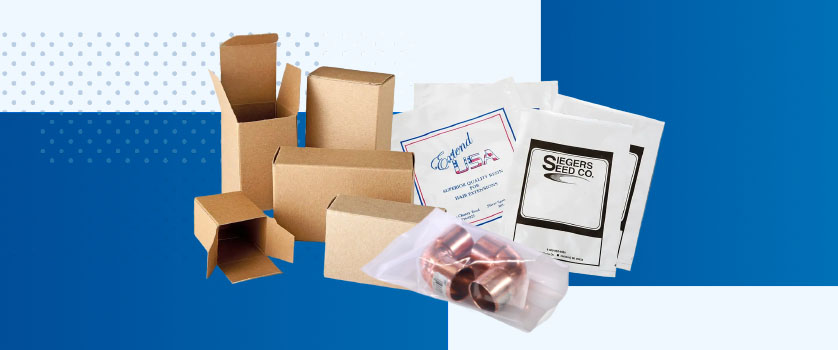
Paper packaging works well for dry goods and parts shipped in climate-controlled areas. Kraft wraps protect individual parts from scratches, while corrugated boxes absorb impact during transport. These materials cost less than engineered plastics and support sustainability goals through recycling.
Cellulose fibers absorb moisture from the air, which limits paper’s use with humidity-sensitive products. Long-term storage and changing climates need barrier materials that block moisture. For controlled warehouse environments and short supply chains, paper works well.
However, many paper and paperboard packaging materials don’t meet military specification requirements or effectively protect electronics from humidity damage.
Plastics
Plastics provide moisture and chemical resistance across many uses. Polyethylene offers flexible films and bags with moderate moisture protection, while polypropylene handles higher temperatures during shipping and storage.
These materials adapt easily to specific product needs through custom printing, heat-sealing and forming. Custom bag sizes can remove excess air and reduce shipping volume. This combination of flexibility and low cost makes plastics the top choice for industrial packaging in electronics, automotive and consumer goods.
Moisture Barrier Bags
Moisture barrier bags protect electronics, medicines and metal parts during storage and shipment to humid areas. Multilayer designs include aluminum foil placed between plastic films. The aluminum layer blocks oxygen and moisture, while plastic layers add strength and heat-sealing ability.
The moisture barrier bags market is expected to reach $884.61 million by 2033, underscoring its importance. Industries rely on these bags to protect sensitive products:
- Corrosion prevention in electronics manufacturing: Circuit boards and connectors stay protected during overseas shipping. This prevents moisture failures in assembly plants.
- Meeting MIL-PRF-131 requirements for military contractors: Military specification packaging keeps spare parts and field equipment working during long-term storage.
- Protecting active ingredients in pharmaceuticals: Humidity can cause ingredient breakdown. This affects how well products work and how long they last.
Moisture barrier bags often come with desiccant packets and humidity indicator cards. These cards show that internal moisture levels stay within safe ranges. Desiccants absorb moisture from inside the sealed package to keep humidity low. Common types include silica gel for general use and clay desiccants for budget applications.
VCI Films and Papers
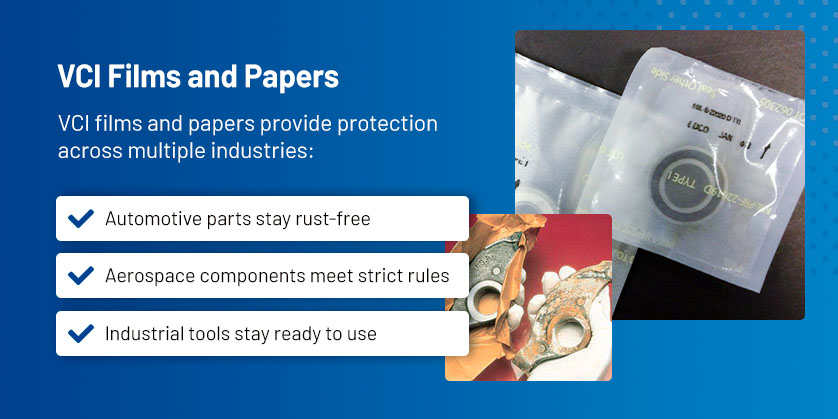
Metal parts are prone to rust during storage and shipping. Corrosion can cost U.S. industries billions every year, making prevention critical for manufacturers. This is especially true for ferrous metals, like steel, and non-ferrous metals, like copper and brass. Volatile corrosion inhibitor (VCI) packaging releases special molecules. These coat metal surfaces and stop the reactions that cause rust without needing oils or desiccants.
VCI films and papers provide protection across multiple industries:
- Automotive parts stay rust-free: Engines, transmissions and brake parts stay clean during warehouse storage and international shipping.
- Aerospace components meet strict rules: Precision-machined parts keep their exact measurements. They don’t get surface rust that could cause rejection.
- Industrial tools stay ready to use: Dies, molds and cutting tools come out clean. They’re ready for production without extra cleaning.
The vapor protection reaches every surface, including recessed areas and complex shapes where liquid coatings can’t penetrate. Once sealed, VCI packaging provides continuous protection for years without reapplication or maintenance.
Static Shielding Bags
Static electricity can damage electronic parts like computer chips and sensors. To prevent this damage, static shielding bags use multiple layers. Inner layers stop static charges from building up on parts, while outer layers block outside electrical interference.
The metallic coating gives these bags their silver appearance and creates a Faraday cage effect. This shield blocks electromagnetic interference from radios, cell phones and other electronic equipment that could damage sensitive components.
Electronics manufacturers use static shielding bags during assembly, testing and shipping. Military specifications require static protection for aircraft electronics, communication systems and guidance equipment.
Understanding Military Specification Packaging
Military specification packaging (often called MIL-SPEC or Mil-Spec packaging) follows strict government rules designed to protect defense equipment during long-term storage and global shipping. Defense contractors must use packaging that meets these requirements when supplying parts and equipment to military branches.
Why MIL-SPEC Standards Exist
Military equipment often sits in storage for years before use. It ships to locations with extreme conditions:
- Desert heat that breaks down glues and seals
- Tropical humidity that causes rust
- Arctic cold that makes materials crack
- Long storage periods lasting multiple years
Standard commercial packaging doesn’t provide enough protection for these conditions. MIL-SPEC packaging must prove it can prevent moisture damage, rust, physical impact and dirt over years of storage and shipping. MIL-PRF-131 defines exact requirements for barrier materials used in military applications.
Factor in Your Specific Requirements
The right packaging depends on your product needs, supply chain conditions and rules.
Start by figuring out what threatens your product from manufacturing to delivery. Common threats include moisture, physical damage, temperature changes, static electricity or rust. Then decide how much protection you need. Consider how long products will be stored, what conditions they’ll face and what damage would cost your operation.
Match protection level to actual risk:
- Use vapor barriers for products that need to stay dry, especially electronics and metal parts that can rust.
- Use shielding materials for electronics that static electricity can damage.
- Use VCI packaging to protect metal parts from corrosion when storing for more than 90 days.
- Use multilayer barriers for expensive or fragile items when the product costs more to replace than the packaging.
Transit time and storage length matter too. A three-week ocean shipment through tropical ports creates different challenges than overnight air freight in climate-controlled planes. Products stored for months in unheated warehouses face temperature swings and humidity changes that short-term storage avoids.
Rules often determine which materials you must use. Military contracts require specific barrier levels and tests, while consumer goods focus on sustainability and recycling. Base your packaging choice on actual requirements rather than guesses about what might work.
Get the Right Packaging for Your Products With Edco Supply Corporation
Edco Supply Corporation manufactures military specification packaging that meets the strict requirements of defense contractors, electronics producers and industrial manufacturers. Our moisture barrier bags, VCI films and static shielding solutions protect your products during storage and shipping.
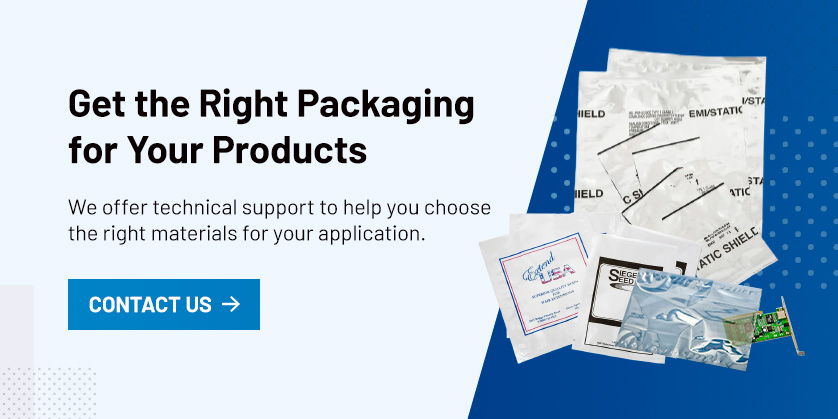
As the World’s Leading Supplier of Military Specification Packaging, we offer technical support to help you choose the right materials for your application. Call us at 646-212-0884 or fill out our online form to discuss your packaging requirements.