


Military specifications (MIL-SPEC) are nonnegotiable for materials used in the defense industry. Components must be reliable and interoperable so that they work for a wide range of high-stakes uses. One of the major specifications for military materials is MIL-STD-2073. It plays a critical role in ensuring that items shipped through the Department of Defense (DoD) supply chain are properly protected against damage.
If you’re manufacturing, packaging or delivering products for military applications, you must understand MIL-STD-2073 compliance.
What Is MIL-STD-2073?
MIL-STD-2073 is the primary DoD document governing military packaging standards. It defines the methods and materials needed to protect materials from corrosion, deterioration and physical damage as they move through the shipping process. MIL-STD-2073 establishes procedures to ensure that every item arrives in a serviceable condition, regardless of distance or environment. It also covers these specifications needed for each item type:
- Method of preservation
- Level of protection
- Quantity per unit pack (QUP)
- Marking requirements
All shipments are inspected by DoD-assigned Quality Assurance Representatives (QARs). They verify shipment quality with MIL-STD-2073 and other relevant standards.
Why Contractors and Suppliers Need to Know MIL-STD-2073
Contractors supplying the DoD using the Defense Transportation System (DTS) are held to some of the highest standards of quality and consistency. MIL-STD-2073 provides them with a clear guideline to follow, making compliance easier. Each contract award specifies packaging codes that set the appropriate standards for shipping. If contractors fail to comply, they risk severe penalties. Organizations could face rejected shipments, delayed payments or repackaging at their own expense.
While following MIL-STD-2073 requirements is critical for guarding business success, it’s also essential for protecting the military supply chain. Without consistent standards, there’s no guarantee that items are shipped safely. They could arrive damaged before they’re even used, putting lives at risk. Additionally, proper, standardized packaging reduces waste, which lowers supplier expenses and minimizes delays due to broken parts.
Core Components of MIL-STD-2073 Packaging
At its core, MIL-STD-2073 is about packaging protection and consistency. Items need to withstand environmental and mechanical hazards to make it to their destination safely. Most packaging instructions therefore fall under four major categories: the method of preservation, the level and type of packaging, QUP and the marking requirements.
Preservation Methods
Preservation methods fall under different codes, ranging from 10 to 50. Method 10 is physical protection. The level of preservation continues up through Method 50, water vapor-proof protection with desiccant. The longer the storage term or the harsher the environment, the higher the preservation code.
The method of preservation code tells the packager which protective materials to use. This way, the item is ready to withstand the entire journey, so it arrives safely through storage and transportation.
Packaging and Containers
After preservation, packagers must place items in packaging that provides the correct level of protection. Level A is intended for severe, worldwide handling and storage conditions, such as overseas shipments. Level B is for domestic or controlled environments. Packaging can include everything from reusable containers to barrier materials and cushioning. The goal is to match the container to the item’s fragility and transport needs.
QUP
QUP specifies the number of items that must be enclosed in a single unit package. A QUP of 001 means individual item packaging — higher QUPs allow multiple identical items in the same pack. Changing the number of items in the package from the required QUP to save on packing costs violates MIL-STD-2073.
Marking and Identification
All packages prepared according to MIL-STD-2073 must be marked accordingly. Standardized markings let DoD systems accurately track and record packages. Markings include:
- Item identification
- Contract number
- Preservation data
- Barcoding or RFID elements
How to Stay MIL-STD-2073 Compliant
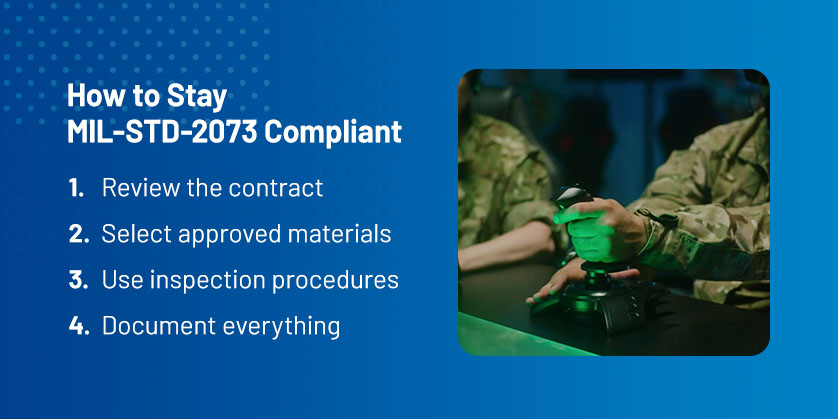
MIL-STD-2073 compliance takes detailed planning and documentation. Any missteps could cost your business a big contract. Review your DoD agreement and carefully note all the packaging requirements. Then, break your process down into a clear structure so you can easily follow the military packaging standard:
- Review the contract: Identify all cited packing codes and requirements within the award. What method of preservation, QUP, level of protection and markings apply to each item?
- Select approved materials: Use DoD-approved barrier materials that meet the relevant specifications, like MIL-D-3464 for desiccants. Only certified materials will qualify and provide the proper protection. Choosing approved materials earlier in the process keeps you from failing inspections and reworking packaging.
- Use inspection procedures: Follow MIL-STD-2073’s inspection criteria for your internal quality assurance systems. This includes verifying seal integrity, confirming correct markings and using the right materials.
- Document everything: Keep complete documentation of all packaging materials, codes and procedures. Records keep you ready for audits and ensure that you’re compliant with DoD standards.
Common Challenges in Military Packaging
While MIL-STD-2073 standards are designed to be clear, errors can always happen. Even the smallest deviation can lead to rejected shipments and delays in contract fulfillment. Watch for:
- Misinterpreted codes: Each method code has a specific purpose. If you mix them up, you could expose items to corrosion, contamination and shipping damage.
- Incorrect materials: Materials like barrier films and cushioning must meet MIL-SPEC packaging standards. Substituting with commercial-grade products leads to poor protection and failed inspections.
- Improper packing requirements: Packaging too many or too few items per unit pack violates contractual agreements.
- Poor documentation: Leaving out essential details, such as contract numbers, affects traceability and leads to mistrust in your performance.
Packaging issues often stem from inconsistent training or miscommunications. Any outdated procedures can affect logistics and packaging teams. Then, you’ve suddenly shipped out materials with the wrong packing requirements. Make sure you have consistent controls and a partner who can deliver reputable packaging supplies so your shipments meet the DoD’s highest standards.
How Edco Supply Corporation Can Help
Edco Supply Corporation is your partner in all things military specification packaging. With decades of experience serving contractors and government agencies, Edco is here to make meeting MIL-STD-2073 standards easy.
We go above and beyond for our clients. Our experienced team delivers hands-on support with every project. We help contractors interpret complex DoD codes, select approved materials and meet bid deadlines with fast fulfillment. Our expertise in preservation and compliance materials supports packaging requirements across all branches of the military. Enjoy superior performance and consistent peace of mind in every order.

Get Expert Help With MIL-STD-2073 Compliance
MIL-STD-2073 noncompliance can lead to rejected shipments and expensive reworks. The last thing you want is to risk contract performance. Edco’s team of DoD-compliant packaging experts helps eliminate those risks. All products are tested, inspected and certified to align with DoD standards. With a complete range of packaging materials, you can count on Edco Supply Corporation for custom solutions that meet or exceed your requirements.
Ship with confidence and ensure your shipments pass inspection the first time. Request a quote for MIL-SPEC packaging today!